


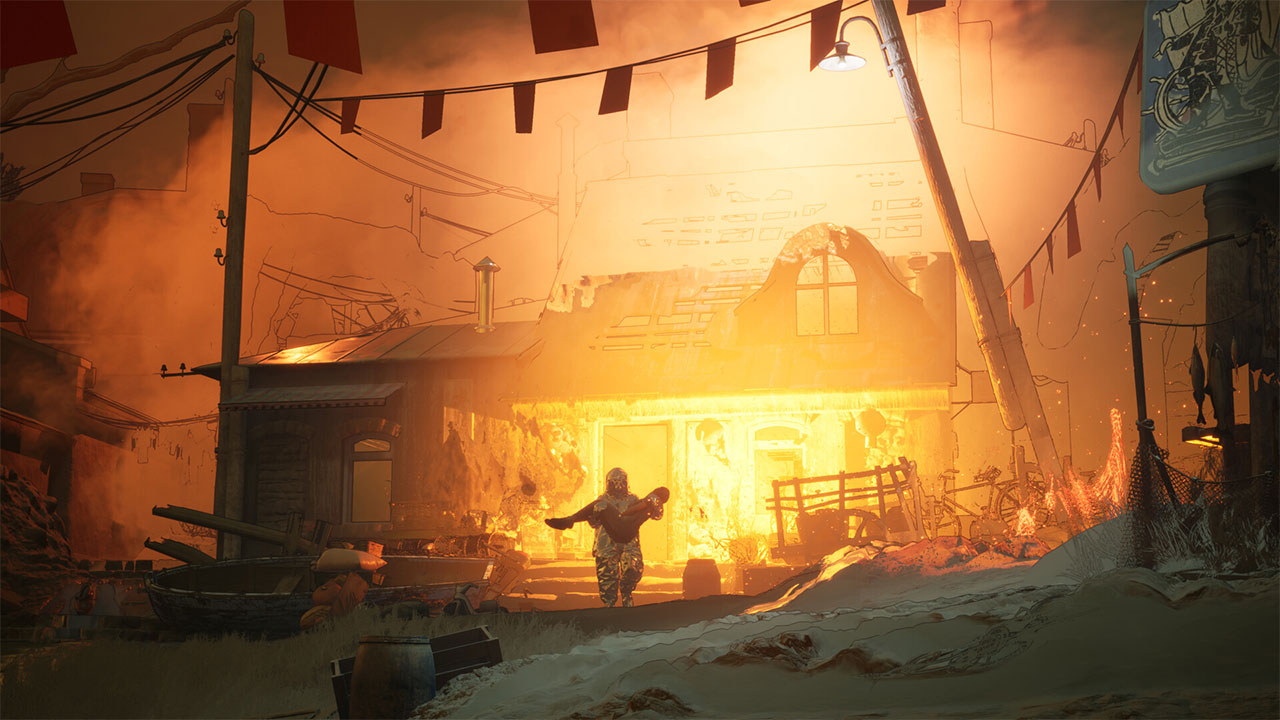
Well, this is interesting, a new twist on a survival game. On the surface, Into the Fire centers on extraction elements where the objective isn’t simply gathering resources, but pulling people, animals, and other living elements out of increasingly hostile disaster zones. It also appears, conditions shift constantly, with ash clouds, lava flows, and seismic activity altering routes and forcing players to adapt in real time. This sounds like Into the Dark but with Fire, and animal rescue. Let’s take a deeper look at survival in the game.
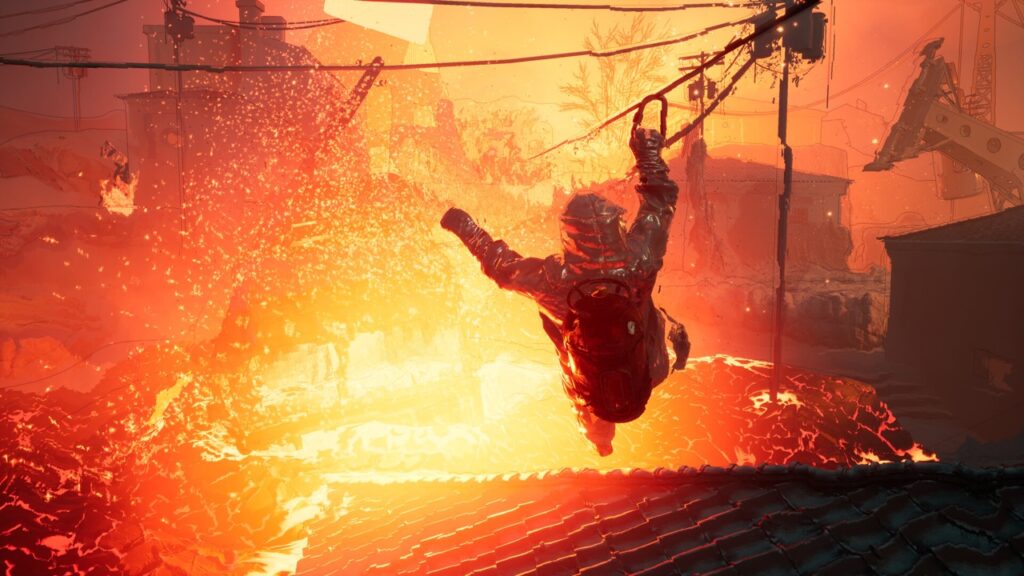
Each objective unfolds under strict pressure. Movement through collapsing structures and fire-filled terrain requires careful timing as pathways can disappear without warning. Environmental threats aren’t scripted events but part of a broader system that changes how levels behave. Fire spreads dynamically, temperatures rise, and hazards escalate the longer a player stays in the field. The result is a scenario where hesitation can close off escape routes or make objectives unreachable.
Between expeditions, the focus shifts to managing a central hub that acts as a living settlement rather than a static menu. The people and animals rescued during expeditions directly influence how this space develops. Survivors introduce new capabilities, including access to equipment, crafting options, or other functional upgrades. At the same time, they create additional demands. Resources such as food, water, and shelter must be maintained, and morale becomes a key factor in whether the settlement remains stable.
The game treats survival as an ongoing process that extends beyond individual expeditions. Decisions made during expeditions carry long-term consequences, shaping both immediate outcomes and future opportunities. Bringing back more survivors can expand possibilities, but it also increases strain on available supplies. Players are expected to weigh these trade-offs carefully, especially when considering whether they can support those they rescue.
The volcano itself plays a role beyond the landscape. It acts as an evolving threat that responds to player activity, increasing pressure on both expeditions and the hub. This creates a sense that no area is ever truly safe, even outside active expeditions. As the settlement grows, so does the level of danger surrounding it.
Preparation becomes essential to managing these risks. Crafting systems allow players to improve tools and equipment, often tied to who has been rescued. Some survivors unlock new ways to approach hazards or provide alternative resource options through trading. These mechanics tie directly into a loop where each expedition feeds into the next, reinforcing the connection between fieldwork and long-term survival.
The setting blends natural disaster with elements inspired by mythology. The island environment includes abandoned infrastructure, buried locations, and signs of past activity that hint at something beyond a typical eruption. As areas shift and reopen, exploration reveals more of this background, suggesting that the unfolding events may not be entirely natural.
The developers of Into the Fire are looking toward a system-driven survival experience where instability defines both moment-to-moment gameplay and broader progression. And really, I’m digging into the idea. I’ll likely be over here playing Fire Watch while I wait.


Leave a Reply
You need to sign in to post a comment.